PRODUCT DESIGN
Designing motivation where fear blocks action
A product design case study about creating a gamified mobile app from scratch to reduce fear, build motivation, and support long-term engagement.

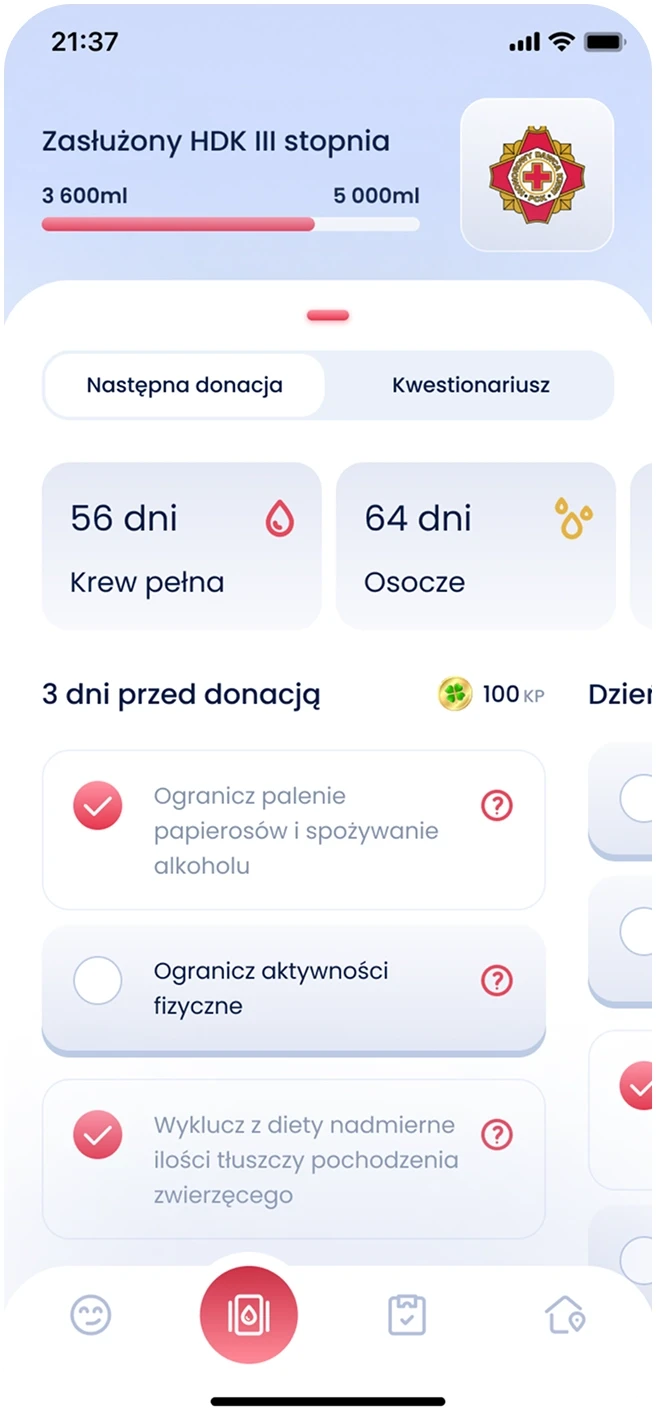
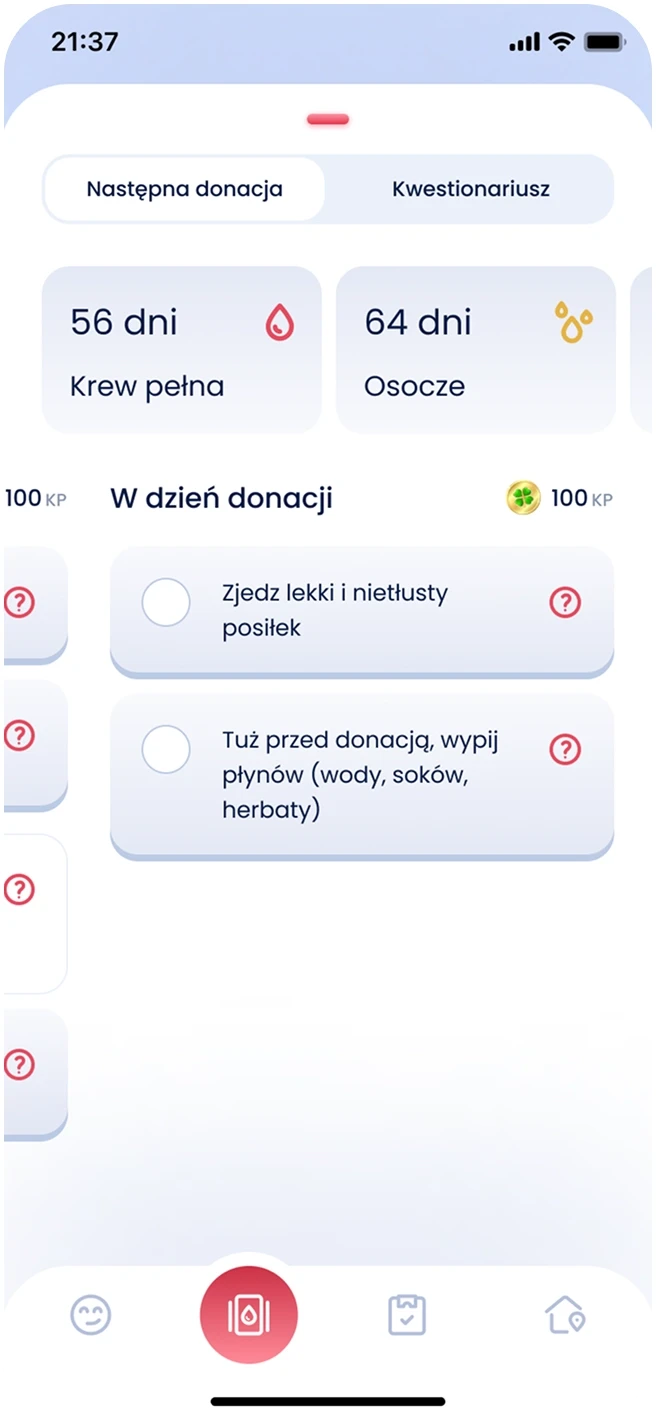
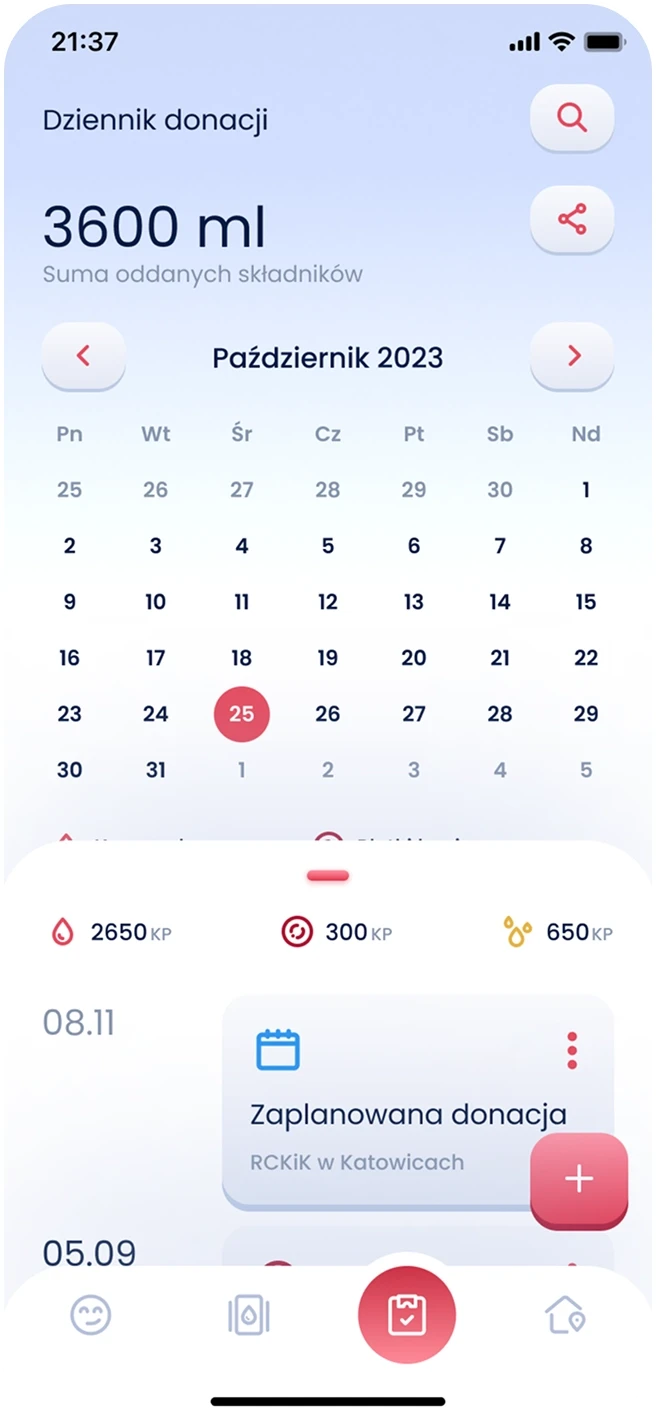
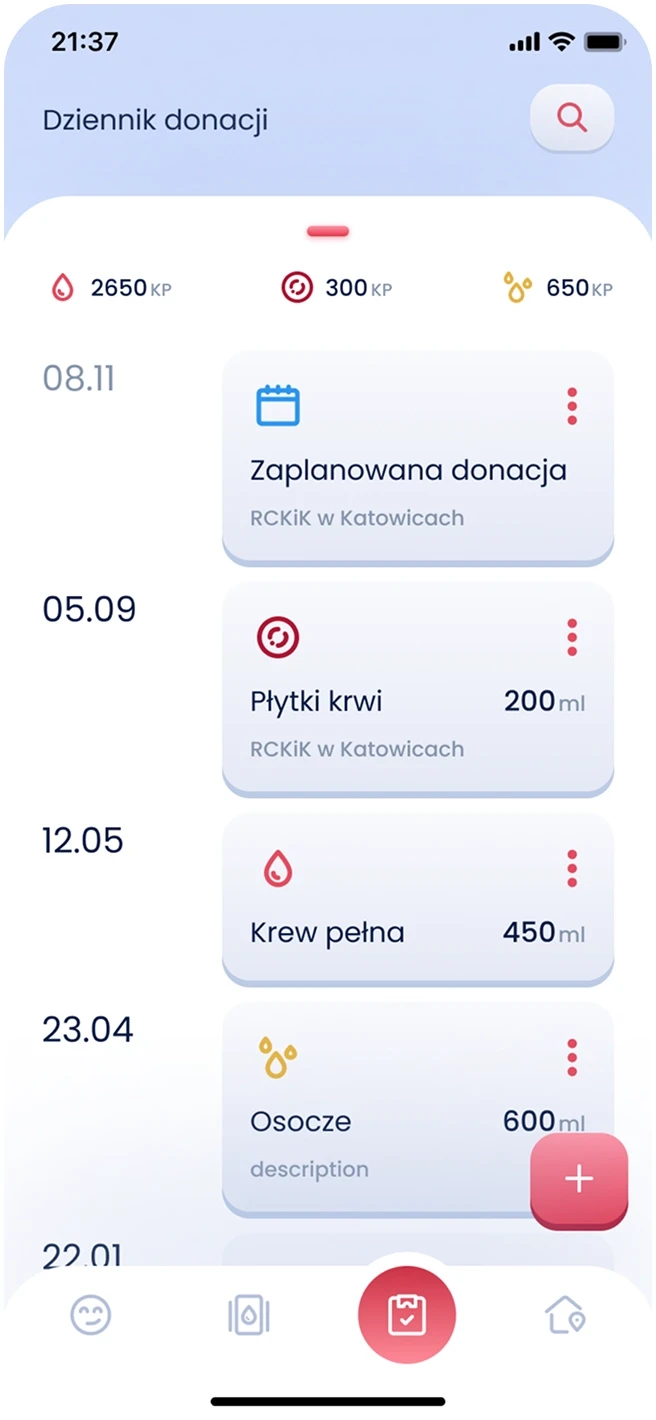
Mariusz, could you tell us how the idea for a blood donor app was born? What inspired you to work on this topic?
The idea was born completely by accident. One evening, while scrolling through Facebook, I came across a post written by a laboratory diagnostician, Mr. Kamil. He described a dramatic story of a young man who, after a serious accident, needed a huge amount of blood. Despite a fast medical response and immediate surgery, his life could not be saved.
That post stopped me for a moment. For the first time, I did not think about the problem as something abstract or system-related, but as something that could affect anyone - me, my loved ones, anyone. In such moments, the lack of blood should never decide about someone’s life.
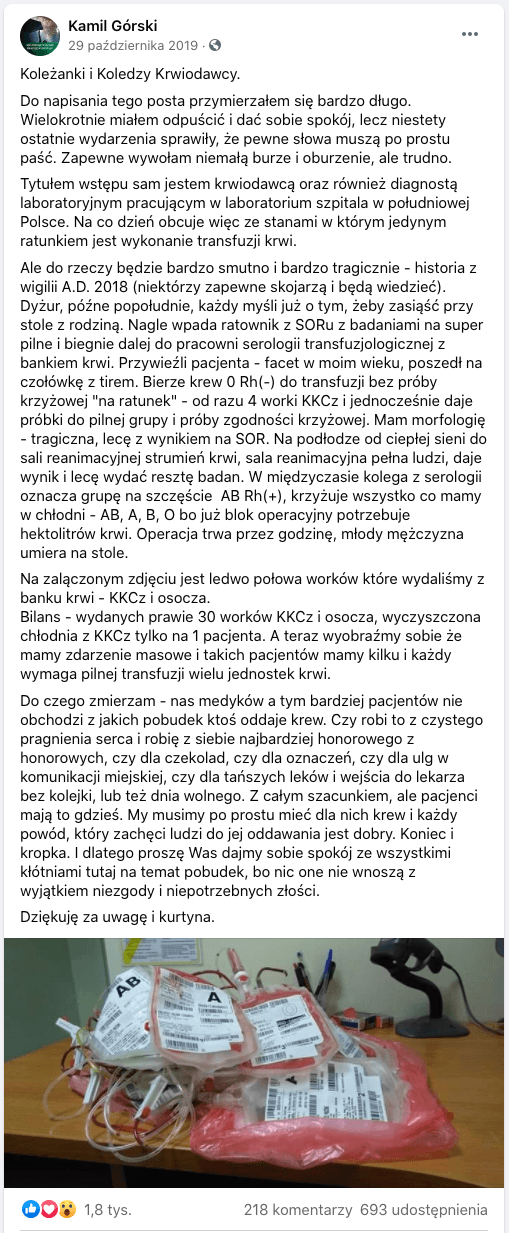
A post by Mr. Kamil, dated October 30, 2019, on the “Honorary Blood Donors” Facebook group” that inspired me to create the project
This was the moment when I felt the need to look deeper. I wanted to understand where blood shortages come from, what the reality of blood donors looks like, and whether, as a designer, I could propose a solution that would really improve the situation.
I understand. What actions did you take to explore this topic further?
First, I joined a Facebook group for blood donors. I wanted to understand their motivations, habits, and also their daily concerns. I quickly noticed that it was a community with a very high level of empathy - people support each other, answer questions from new donors, and motivate others to act.
At the same time, I analysed reviews in Google Play and the App Store for the app most commonly used by blood donors. This allowed me to see the topic from their perspective:
What challenges did you notice in the area of blood donation? What surprised you the most?
The analysis of quantitative research and in-depth interviews allowed me to identify several problems that became the foundation for further work on the project:
What surprised me the most was the scale of absurd myths, especially among younger people. Many of them avoided donating blood because they believed that it would weaken the body, that they could get infected with a disease, or that the whole process is extremely painful.
Only then did I realise how big a barrier the lack of reliable information really is.
What did you want to achieve with this app?
My main goal was to create a tool that would:
I also wanted to change the image of blood donation in Poland and the way people think about it. For many people, the word “blood” automatically brings negative associations - pain, stress, or fear. I wanted to break this image.
That is why I chose a gentle, almost childlike branding. It was meant to warm up the topic and build positive, supportive associations from the very first contact.
How did you know the project was going in the right direction?
Because the project was created completely from scratch, I evaluated the direction mainly through previously defined milestones and fast feedback from friendly designers and potential users. Their first reactions helped me check whether the solutions actually addressed real needs.
Additionally, I relied on a proven, user-centred design process, which I continuously adapted to this project. Thanks to that, I could regularly verify whether my decisions were leading in the right direction.
What were your most important steps from research to the idea for the solution?
The research showed me something I did not expect at all - people do not need another “health app”, but a way to reduce stress and uncertainty related to blood donation.
First, I organized all collected data around emotions:
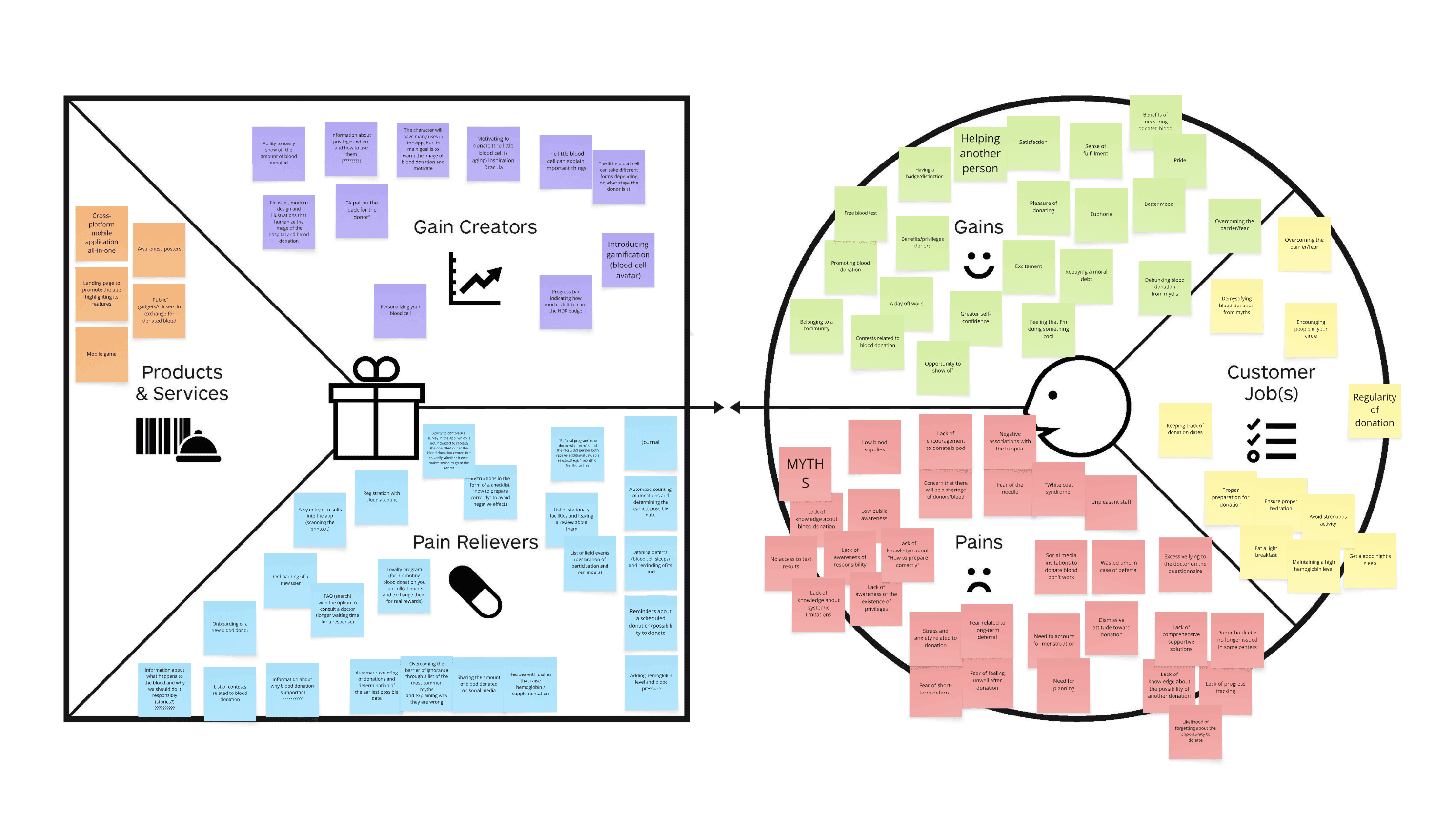
The Value Proposition Canvas helped me identify the product's features and benefits based on the collected pains, needs, and motivations of users.
Only then did a clear pattern emerge: fear disappeared when donors felt they were doing something good and had simple, clear guidance on what to do next.
This was a turning point. I understood that instead of designing another checklist or information panel, I needed to create an experience that gives immediate feedback, strengthens the sense of control, and rewards consistency.
This is how the idea of a character that the user “takes care of” was born - something that warms up the whole process, removes the cold medical context, and turns it into a more emotional, everyday experience.
From that moment, the next steps were translating the concept into information architecture, low-fidelity wireframes, and the first interactive prototype.
Detailed information architecture for Krwinka app divided into app modules
You surely generated many ideas during the analysis phase. How did you decide which features were the most important?
To evaluate this in a structured way, I used the SYSTEMICO model. It helped me define the level of user engagement and separate core features from “nice to have” ones. Thanks to this, I quickly saw which elements were critical for behavior change and which played a supporting role.
Next, I used Red Routes to place key features on a frequency matrix - checking which features users would use most often and which were needed only at specific moments of the journey.
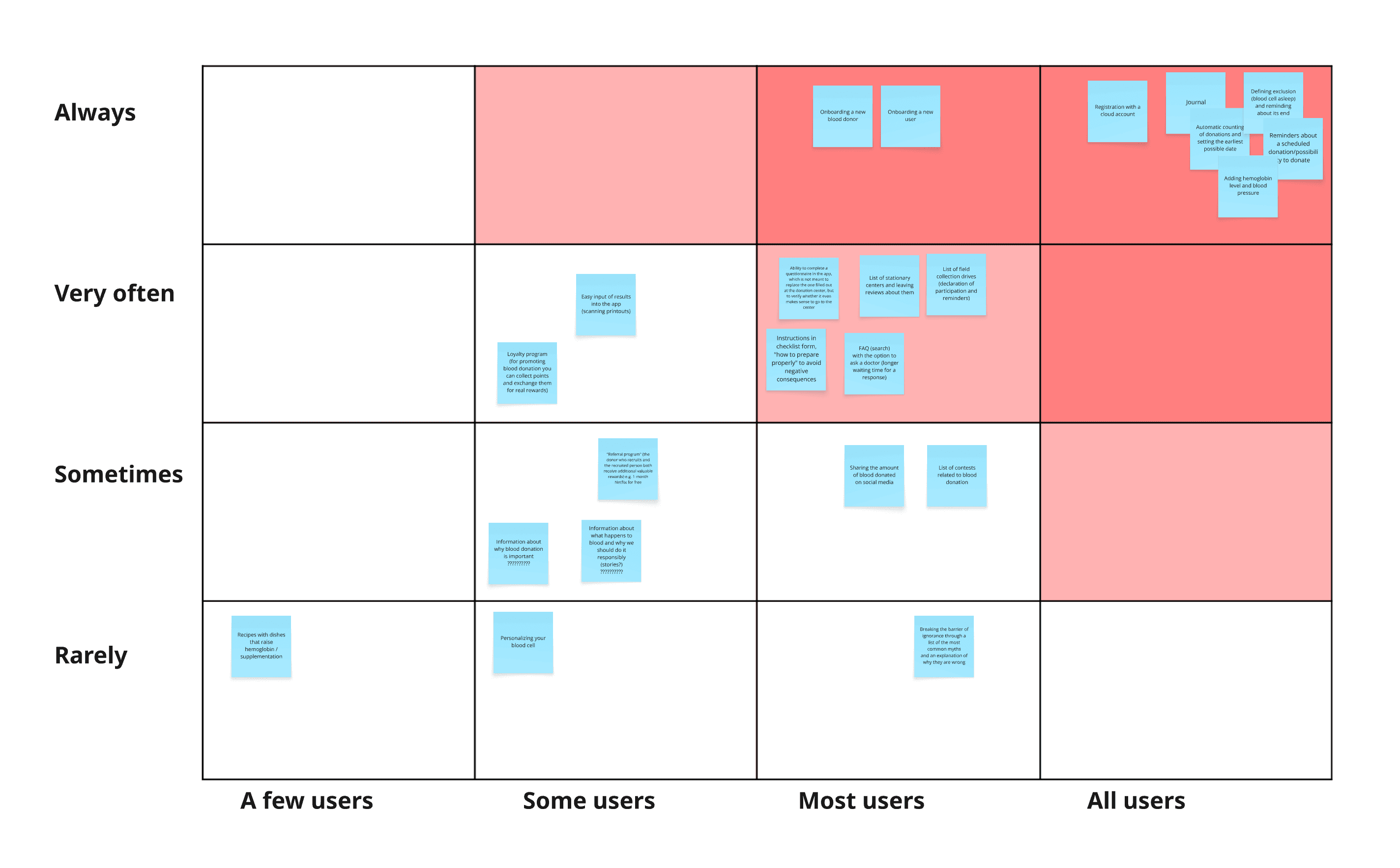
Prioritization of features based on frequency of use
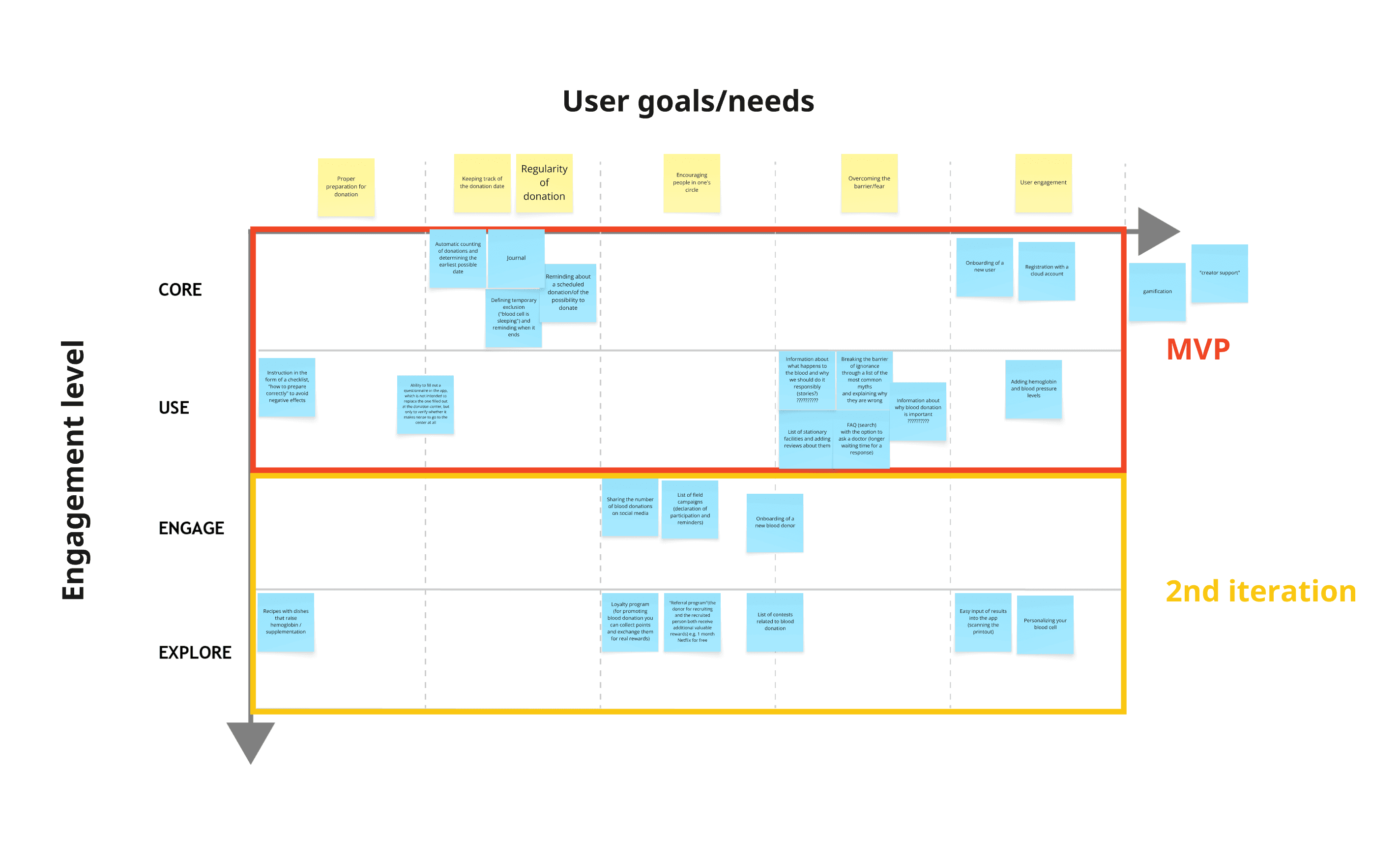
Features prioritization based user goals and needs
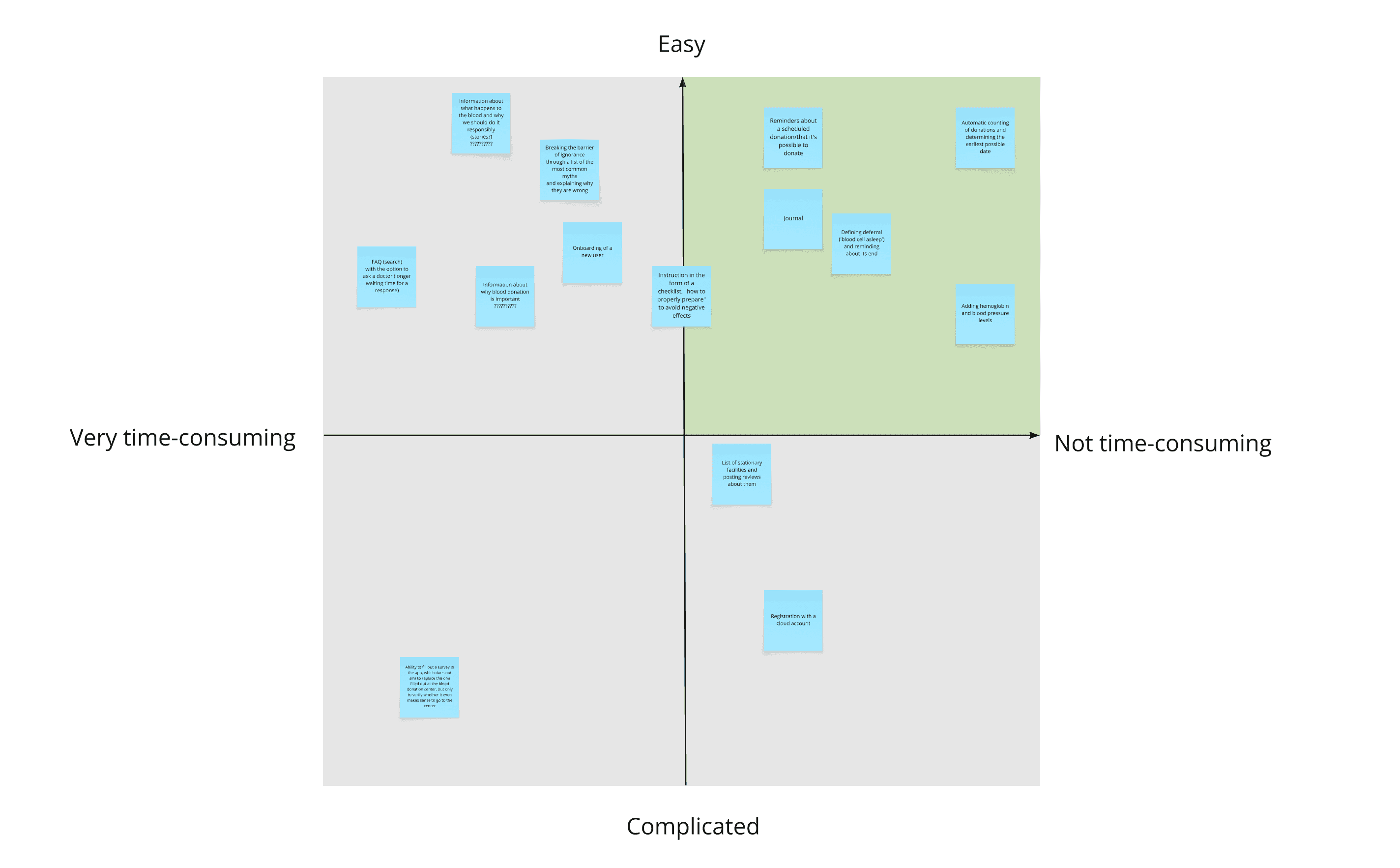
Prioritization of MVP based on implementation limitations
Only after combining both analyses did a clear MVP structure emerge: features with the biggest impact on reducing stress, increasing confidence, and maintaining donation regularity were placed at the top. Supporting features were planned for later stages.
Where did the idea for the brand hero “Krwinka” come from?
During the research, I quickly noticed that people do not give up blood donation because of laziness, but because they lack constant motivation.
Stress, the cold image of donation centers, and the feeling that “this is not for me” made it difficult to maintain regularity. I started looking for a way that would both warm up the topic and build a more personal connection with the user.
Gamification turned out to be a natural direction - it can reduce fear and turn difficult experiences into something more approachable.
Before choosing the form, I had to understand why it should work: which behaviors I wanted to strengthen, which fears to reduce, and what truly motivates my “player”.
The breakthrough came when I remembered the “Dumb Ways to Die” campaign. Its light, humorous style addressed serious topics without scaring people. I realized that blood donation could achieve a similar effect - reduce fear, introduce warmth, and build positive associations.
This is how Krwinka was born: a small, friendly character that gives the whole process a more human touch and creates an emotional bridge between the user and the idea of donating blood.
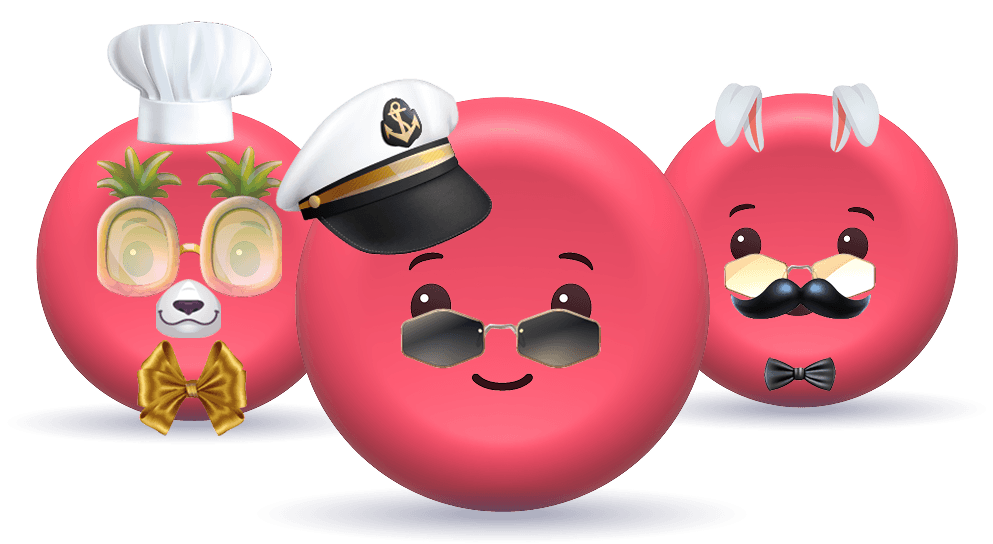
Personalization options for brand hero - “Krwinka”
How did gamification help solve the engagement problem?
Research showed that many young people see no real incentive to engage in blood donation, and at the same time struggle with stress and uncertainty related to their first donation. This combination made long-term motivation difficult.
Based on this, I designed a set of gamification mechanisms to reduce these barriers and turn the process into a lighter, more accessible, and progress-based experience.
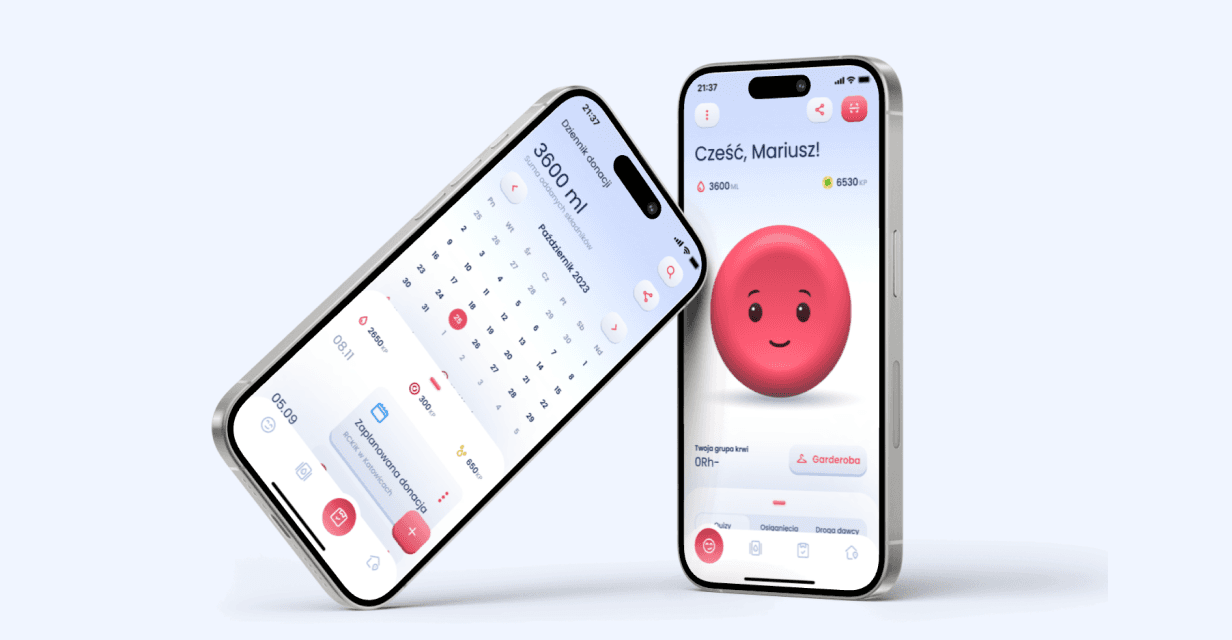
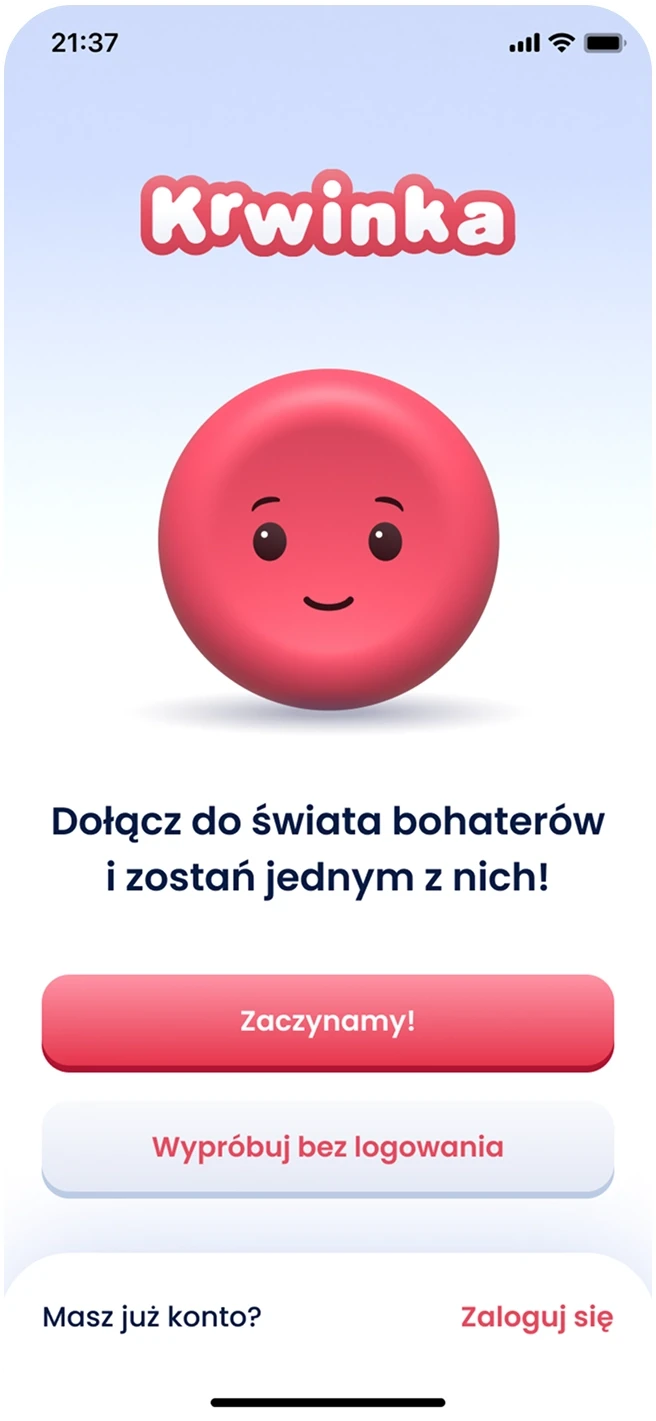
After installing the app, each user receives their own Krwinka - a virtual character that guides them through preparation and donation planning. The user’s task is to take care of its condition by donating blood regularly.
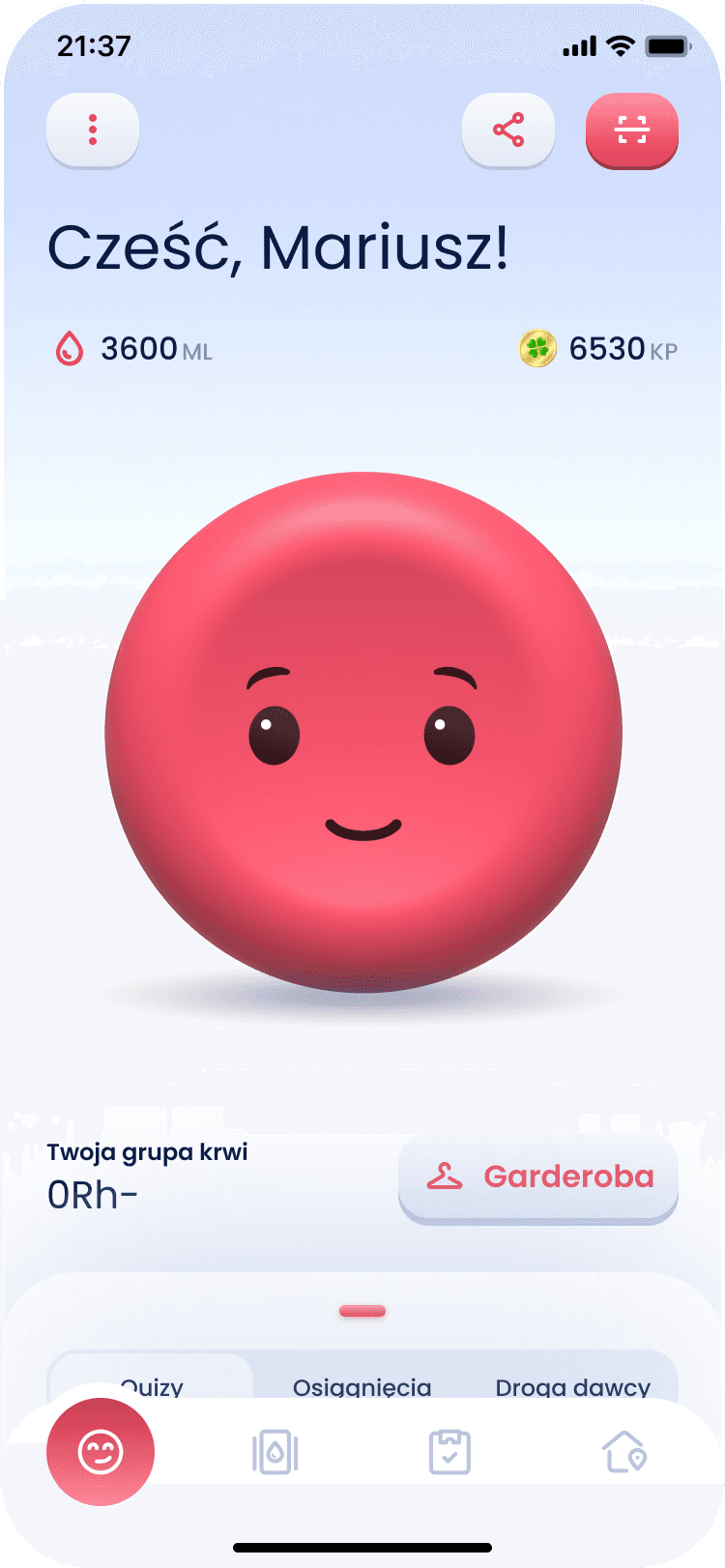
User's home page
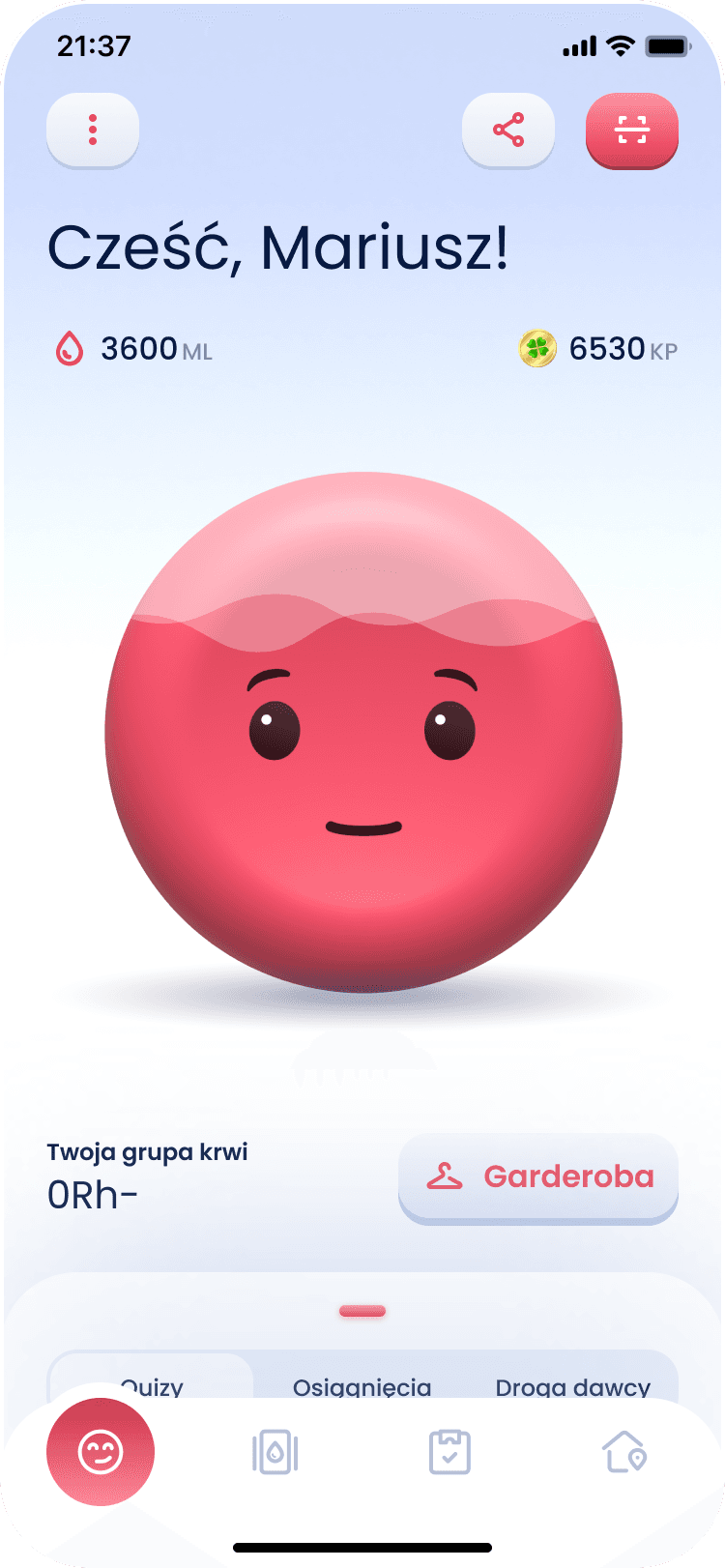
75% health of brand hero
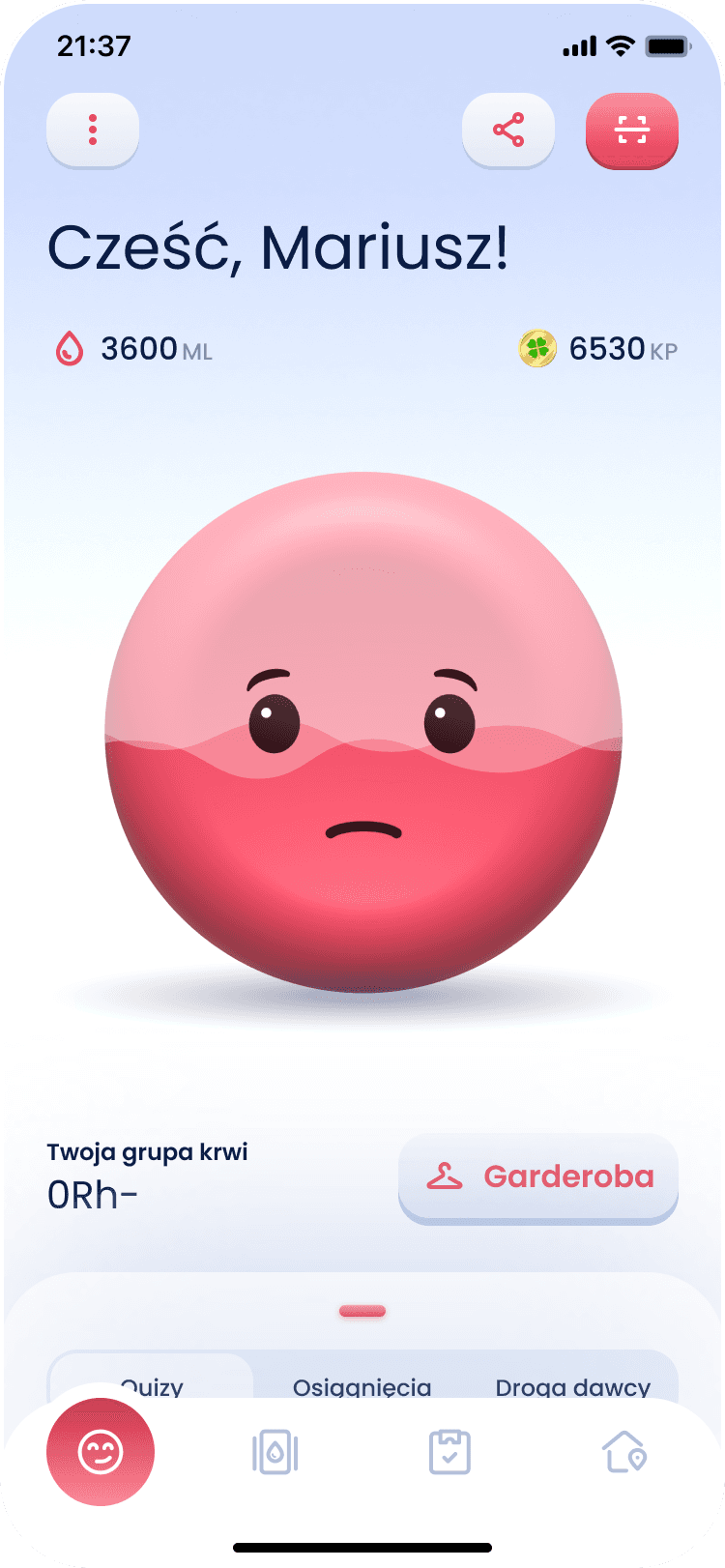
50% health of brand hero
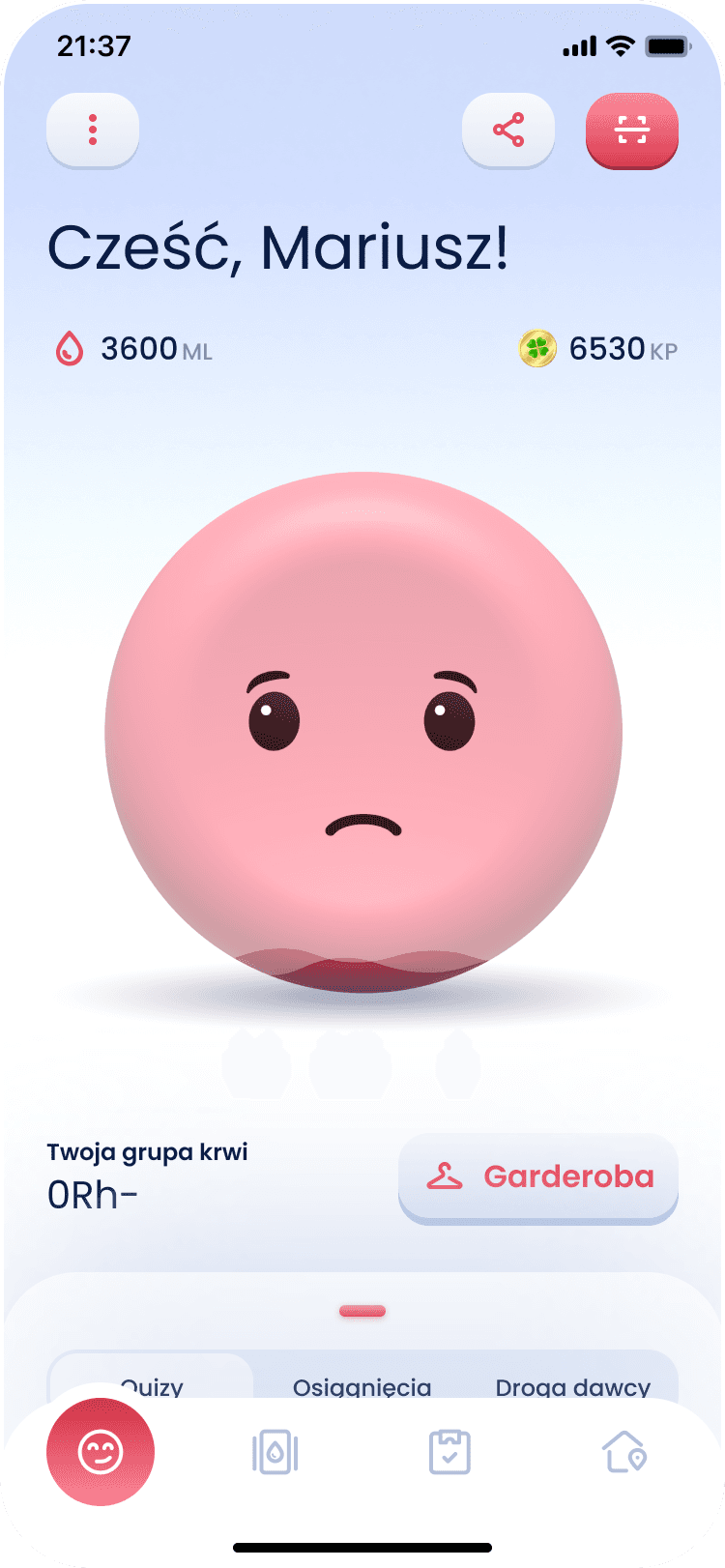
15% health of brand hero
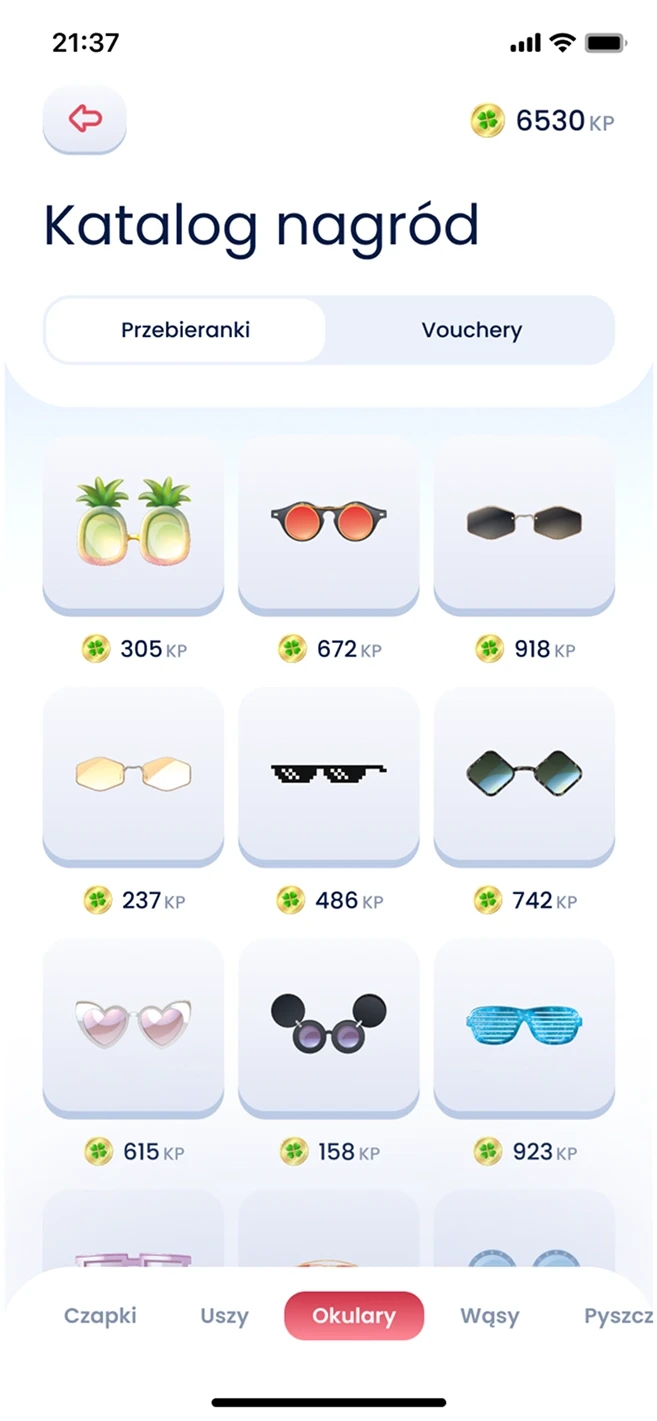
For each donation, users earn “karma points” (because karma comes back), which they can use to personalise their character. This creates a natural reason to return to the app not only when a donation date is approaching, but also between visits.
The goal was to build an emotional bond between the user and the process - so that regularity comes not only from obligation, but also from care for Krwinka and a real sense of impact.
Item shop where user can exchange try on new items for their brand hero
List of items that user can buy for collected Karma Points to personalise brand hero
What did this project teach you about designing for people?
This project made me realise that behind every process there is a person who may feel fear, uncertainty, or simply a lack of motivation. Only conversations with users showed me how many design decisions should be based on emotions, not just logic and features.
I understood that designing for people is not about adding more options, but about reducing tension, building a sense of safety, and encouraging rather than forcing.
This shift in perspective - from “what should I design?” to “why should someone care?” - was the most important lesson for me.
Which decision are you most proud of?
If I had to point to one decision that truly made a difference, it would be combining the topic of blood donation with a light, humorous style and gamification elements.
This decision transformed the project from another serious educational app into something that evokes real emotions - reducing fear, motivating action, and building positive associations with blood donation.
I am proud that from the first insight to the final prototype, I managed to keep this vision consistent. Most importantly, I created a solution that not only educates but also engages. This balance was the hardest, but also the most rewarding.
If you were to design “Krwinka” today, what would you do differently?
Looking back, I see that I moved too quickly into polished designs. Instead of spending hours on high-fidelity screens, I should have tested low-fidelity prototypes with users earlier. This would have allowed me to validate ideas faster, catch issues, and make changes before refining the visual layer.
From an aesthetic perspective, today I would not choose such strong gradients and neumorphism. This project clearly shows how following trends can age quickly and cause long-term issues. Now, I would choose a more timeless, lighter visual style that better supports long-term product growth.